Anthidium manicatum
Wool Carder bee (INvasive)
*NOT A NATIVE BEE* Wool carder bees are native to Europe and were accidentally introduced in the mid 1960s. These bees are considered an invasive pest.
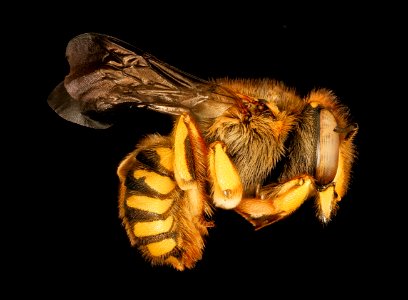
Anthidium manicatum, commonly known as the wool carder bee, is a species of bee native to Europe that was accidentally introduced to North America in the early 1960s. These bees are mid sized, 11-17mm, and are known to be aggressive, attacking and killing native bees throughout Canada and the United States. This species is currently only present in southern Canada, but has been suspected to be travelling further north with every year. These bees are very territorial, and will even chase away larger animals in their territory, often bumping into humans that enter their flower patch. They have an affinity for blue flowers, but are generalists and will get nectar from any source available. Some have speculated that the wool carder bee prefers exotic nectar and will target invasive plants, aiding in their spread. No conclusive studies have been done to support these claims however, so for the time being these remain skeptical accusations. Wool Carders are active from June to October, making it one of the longest persisting bee species in the late autumn season. Carder bees will use hair like fibers from plants to line their nest cavities, which is how they received their names. These bees are most easily distinguished by the yellow wasp-like bands on the sides of their abdomens and smoother appearance.