Megachile pugnata
Pugnacious leafcutter bee
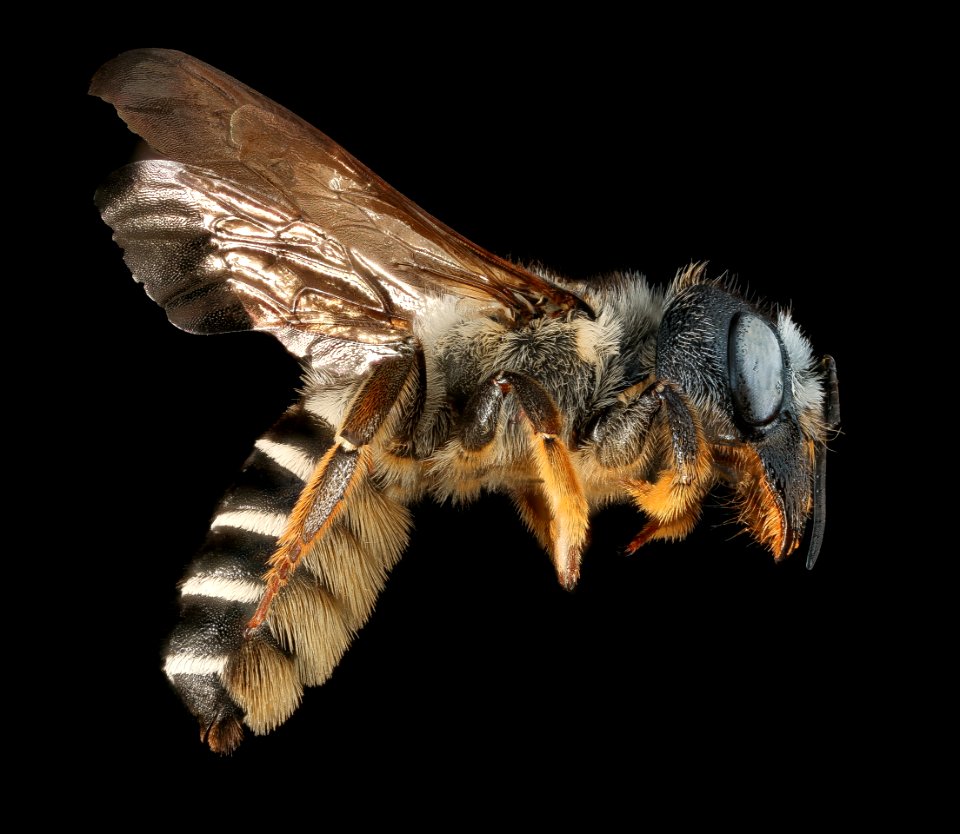
Pugnacious leafcutter bees (Megachile pugnata), are named for their habits of cutting circular or oval shaped holes into leaves and using these pieces to line the insides of their nesting cells. The bees will choose small holes, such as those made by woodpeckers and glue the leaf pieces to the interiors of these cells using mud to create their nests. Their larvae will eat these leaves upon hatching. To carry out the task of cutting leaves these bees have large mandibles, which give them a threatening appearance. They also have many pollen catching hairs on the undersides of their abdomen, making them easy to distinguish from cellophane bees that have similar white banding. Although they have a wide range in the US, pugnacious leafcutter bees inhabit only a few interspersed areas across Canada in each province. These bees emerge late in the season, from July to September. Males are generalists when it comes to flower food sources, whereas females have a particular affinity to the sunflower family Asteraceae, to the point where they will make it their only food source when available. Males and females vary considerably in size, with females being 12 – 18mm long, and males 11 – 13mm long. Males also have yellow fuzz on their forelimbs, while females have darker gray.