Colletes inaequalis
Unequal cellophane bee
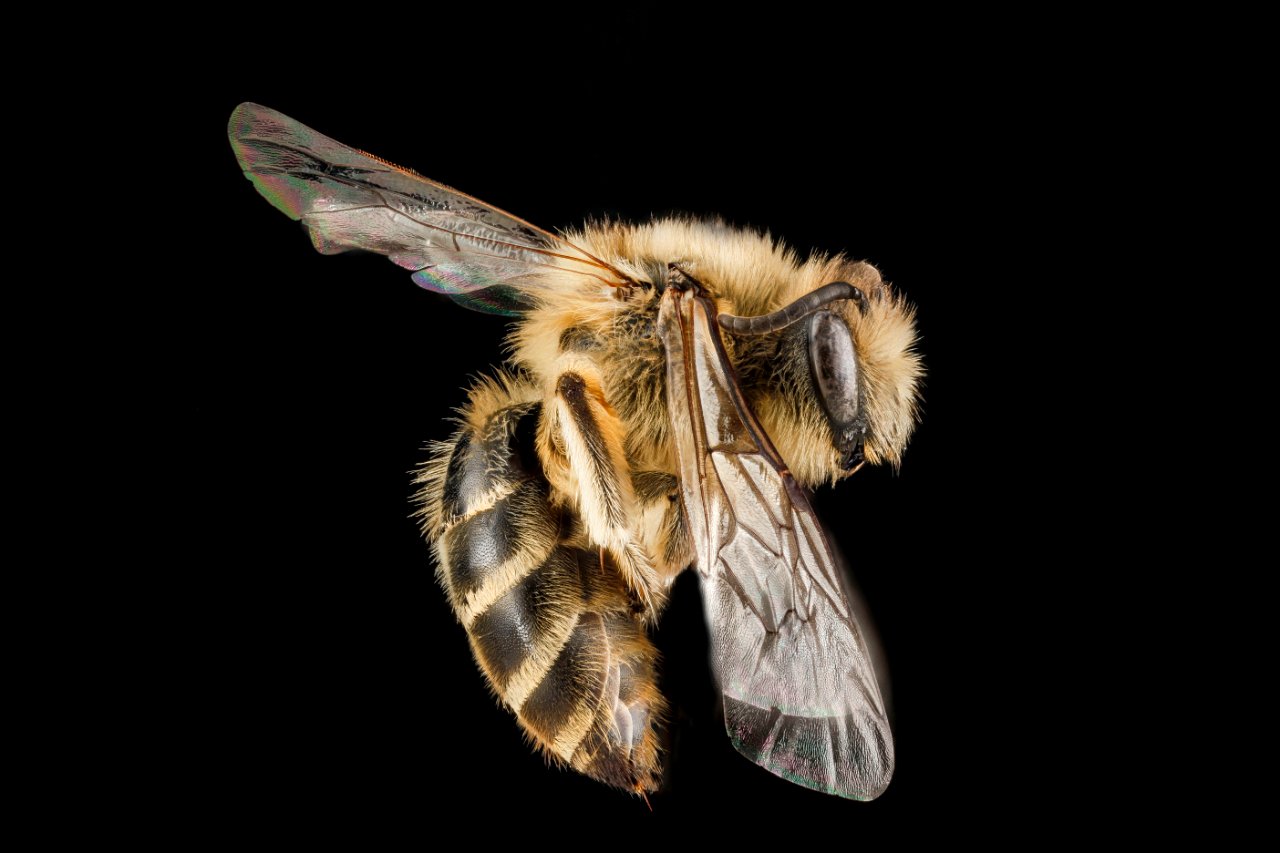
Unequal cellophane bees (Colletes inaequalis), are plaster bees that nest in small underground cells which they line with a special secretion composed of polyester. These small chambers are fully waterproof, resisting thawing snow and heavy spring rain. Cellophane bees emerge from their burrows as early as late march and are most active in April, making them a telltale sign of spring’s arrival. They are more common in the eastern parts of North America, but have been observed in southern and central Alberta as well as Oregon. Males and females differ slightly in size, with the males being smaller at 9 – 10mm in length and the females being 10 – 13mm in length. Males are first to emerge in spring looking for a mate, while the females can be seen guarding the entrances to their cells. Although solitary, these bees will form small communities where hundreds of holes are made in close proximity. They are highly social for solitary bees and will even interact non-aggressively with other species. As the bees emerge so early in the season they have no preferred food sources, instead being generalists on whatever plants are around when the ground thaws. Willows are often visited because of their early flowering times. As a result, early flowering plants highly depend on these bees for pollination.