Bombus nevadensis
Nevada bumble bee
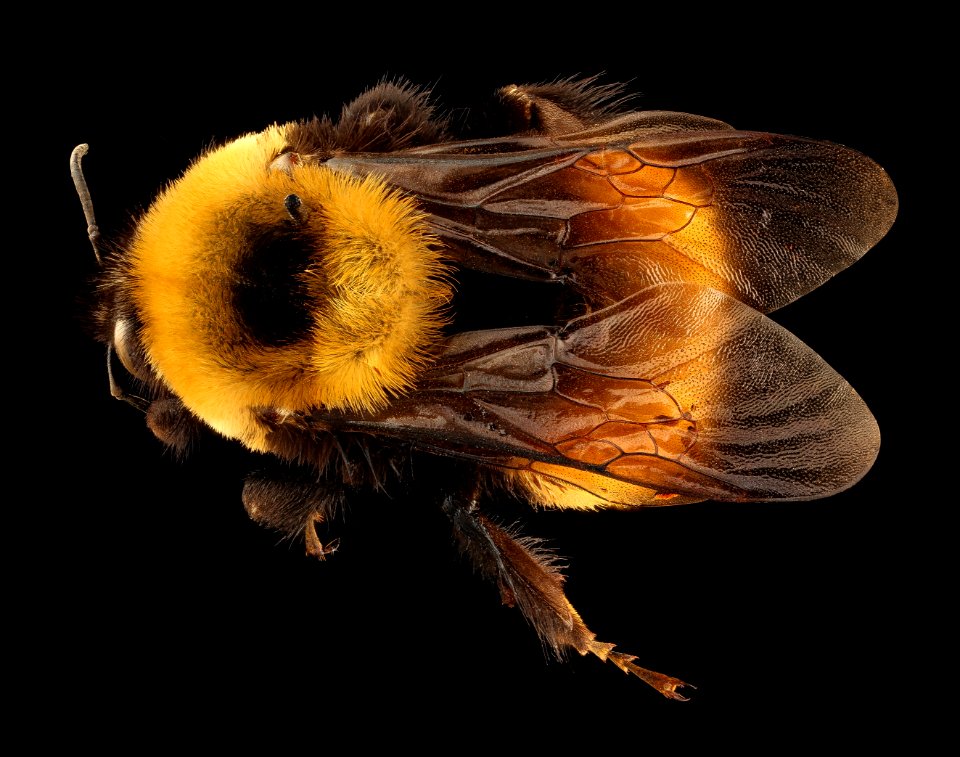
Nevada bumble bees (Bombus nevadensis), are known for their characteristically large eyes. Bees also have long tongues (probboscis) and short dense fur. This bee forms a small subterranean colony and is often found in prairies and mountain meadows. They are widely distributed in Canada and the united states, where single queens will start the nests in May, but the hive becomes active from early summer into fall (July – September). Queens are about 20mm long, while drones are 14mm and workers are 17mm long. Male bumble bees have red tip on the end of their abdomens, and some of the bees are characterized by a black bald spot in the middle of their thorax. It is unknown why some bees have the bald spot and not others, and it is generally attributed to genetic variation. The abdomen of these bees is mostly yellow with a black tip (Tiny bit of red on tip of males). Prefered host plants are Astragalus, Cirsium, Meliotus, Monarda, Penstemon, Phacelia, Salvia, Stachys, Trifolium, and Vaccinium. These bees perform ‘buzz pollinating’ (also known as sonication), a pollination method that vibrates the flowers to release tightly held pollen from the anthers.