
Garden Qualities
Soil, plants, mulch and landscape elements
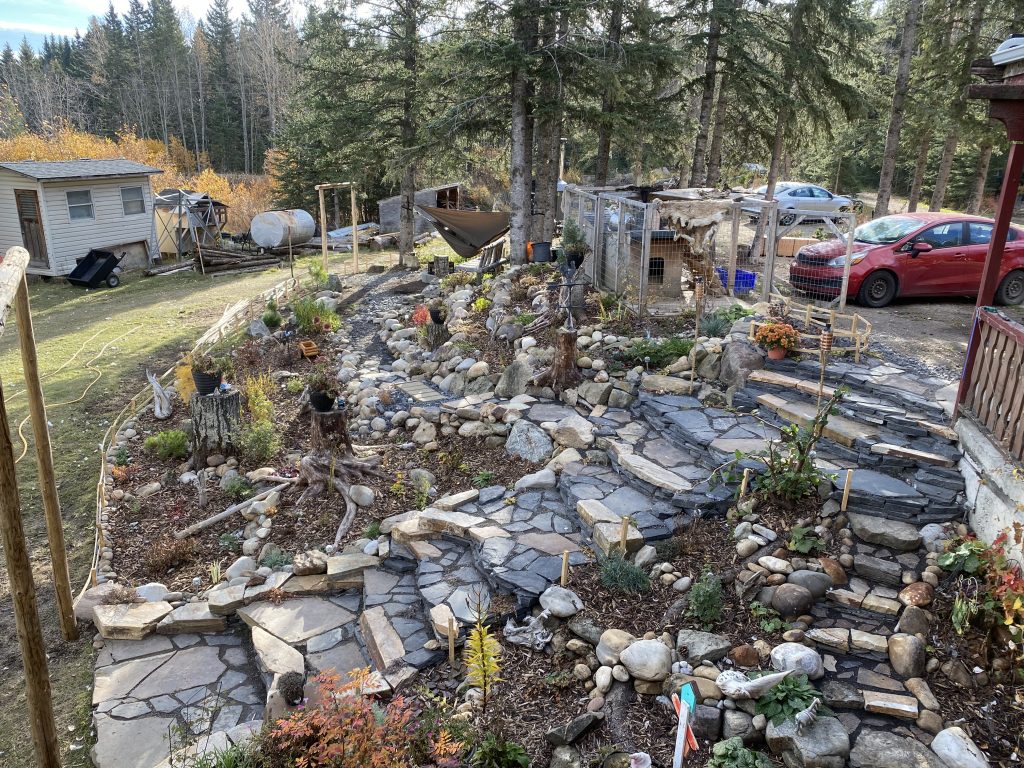
Your Garden Bed is the Foundation of a Tiny Ecosystem
Sustainable gardening practices can create spaces that are both beautiful and eco-friendly, why choose between beauty and functionality when you can have both?
Soil
Soil is at the very foundation of your garden, and will dictate what types of plants you can grown and how healthy they will be. Soil characteristics determine moisture retention, drainage, and nutrient availability as well as anchors and insulates plant roots. It also provides a habitat for soil organisms such as fungi and micro fauna to live in, which often aid in plant health through mutualistic relationships. All these processes work together to recycle raw organic material and transform it into nutrients for your plants to grow. What’s more, is that non-compacted healthy soil will offer a nesting place for at-risk native bees, of which the vast majority nest underground.
Plants
Plants are the main focus of your garden, with bright colours, pleasant fragrances, and even culinary and medicinal uses. The plants that you choose to include in your garden depend on the scope that you are trying to achieve. We offer custom planting lists on our recommendations for ornamental, culinary, medicinal, or mixed gardens, as well as erosion control depending on your goals. In addition, we also offer lawn alternatives which can be much more water efficient, and provide a refuge for pollinators and other wildlife.
Mulch
Mulch is an element that can be both functional and decorative in your garden. There are many types of mulches to choose from, but we recommend natural mulches such as untreated bark chips, or garden residues (fall leaves and yard trimmings are cheap and readily available options as they decompose and add nutrients to the soil). The advantage of bark chips is that they are more ornamental than plant residue and will last longer before becoming a part of the soil. Mulch will act as a barrier for the establishment of weeds as well as help with water retention, as it does not evaporate as quickly. If you would like a more naturalistic garden we recommend leaving a few bare soil patch for native bees to burrow and for flower seeds to spread and grow.
Decorative Elements
Stone is a great addition to any garden, as it is durable, all natural, and adds a certain charm to the garden bed. Many native insects will from their burrows under stones to gain protection from the elements and other wildlife. Wood can be another great addition, with logs or driftwood pieces strategically placed for a more natural look. When choosing ornaments other than stone or wood, avoid plastics that can leach harmful chemicals into the soil as they become weathered. Caution should also be taken with metals, which will rust into the soil over time and can become toxic to plants in higher doses.
Maintenance in an Environmentally Friendly Way
Bees and other insects overwinter in the dead vegetation of the garden. Instead of fall cleanups opt for spring cleanups instead, once the snow has thawed. The native insects will thank you for leaving them a place to take refuge over the winter, and will emerge the following season already in the garden and ready to pollinate or eat unwanted pests. In addition, keep in mind that the best way to support wild bees is by planting flowers that bloom at the same time as their period of activity. A large selection of native flowering plants will ensure native bees are cared for from April all the way into October if the plant selection is done right. Visit our ‘Native Flowers for Pollinators’ page for a list of our recommended plant choices for wild bee population support.
Remember, Absolutely No Pesticides
One of the most major factors contributing to the decline of pollinators and other beneficial insects is pesticide use. When fields and ornamental crops are sprayed for problem insects, beneficial insects are killed as well. Alternatives that will control pests are biocontrols using predatory insects. Ladybugs are a good example, as they can be bought in bulk at many nurseries and will effectively and naturally control aphid populations, while leaving other insects untouched. If there are few pests and they are noticed early on, they can also be removed manually using a soft glove or cloth.